
Incheon · Area guide
Ganghwado
강화도
Dolmens, Jeondeungsa and Manisan's altar: Incheon's island of heritage, by bus.
The short answer
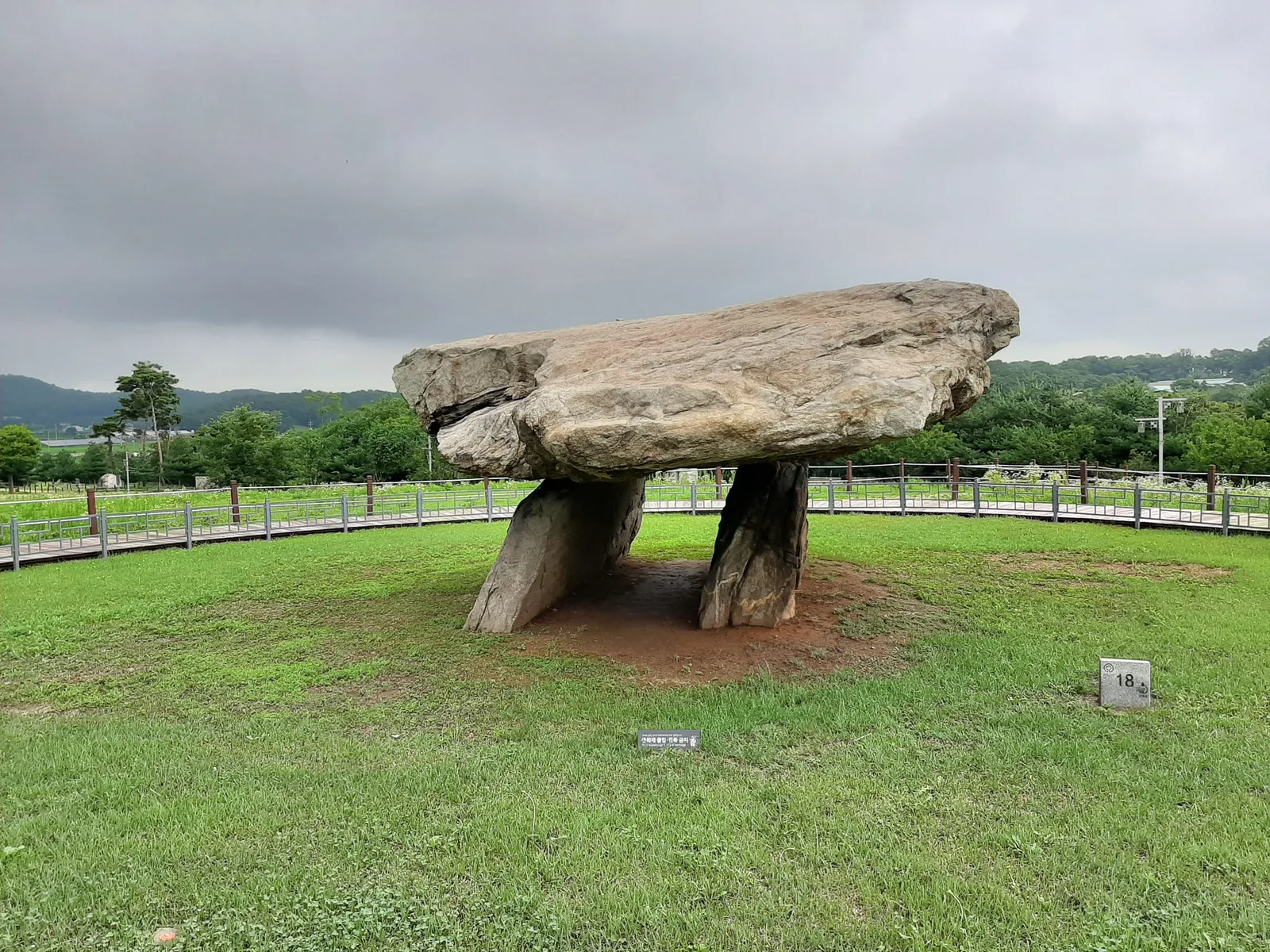
Stay on Ganghwado for Incheon's heritage. KTO calls the island an open-air museum, with sites from prehistoric dolmens to Goryeo and Joseon structures. The Ganghwa Dolmen Sites are part of a UNESCO World Heritage property inscribed in 2000 under criterion (iii); KTO counts over 160 Bronze Age dolmens, and at Bugeun-ri a table-shaped dolmen has a cover stone 7.1 m long. Jeondeungsa, inside Samnangseong Fortress, is said to have been built in 381, and on Manisan stands Chamseongdan, where Dangun is said to have offered sacrifices to the heavens.
The sights are spread out and the buses take time, which is why a night pays off. Ganghwa-gun's timetables list bus 3000 from Sinchon in Seoul every 30 minutes, taking 1 hour 20 minutes to 1 hour 50, and bus 90 from Bupyeong via Geomam every 15 minutes, taking 2 hours. On the island, circular bus 04 reaches Jeondeungsa and Dongmak Beach, and the Tasigyeo tour bus, Thursday to Sunday, links the Pungmul Market, the Peace Observatory and the dolmens.
Best for
- The UNESCO-listed Ganghwa dolmens
- Temples, and a templestay at Jeondeungsa
- History from Dangun to the Goryeo court
- Market days on dates ending in 2 and 7
- A slow island night by bus from Seoul
Think twice if
- A quick hop from the airport
- Nightlife and city sights
- Day trips on a tight schedule: the buses take time
Getting here
| Station | Lines |
|---|---|
| Ganghwa Bus Terminal | Bus 3000 (bay 1), bus 90, circular bus 04 and the Tasigyeo tour bus (Ganghwa-gun); bus 31B to Seongmodo (KTO, 2023) |
| Bus 3000 | Ganghwa Bus Terminal to Sinchon Station (Line 2) in Seoul, via Hapjeong and Hongik Univ. stations; every 30 min, 1 h 20 min to 1 h 50 min (Ganghwa-gun, 2025) |
| Bus 90 | Ganghwa Bus Terminal to Bupyeong Station via Geomam Station; every 15 min, 2 h (Ganghwa-gun, 2026) |
| Circular bus 04 | From Ganghwa Bus Terminal via Oepo Terminal, Hwado Terminal, Dongmak Beach, Hamheo Dongcheon and Jeondeungsa; 8 trips a day, a 1 h 40 min loop of 59 km (Ganghwa-gun, 2025) |
| Tasigyeo tour bus | Thursday to Sunday, every 40 min from 09:40 to 17:20: Gapgot Dondae, Ganghwa Bus Terminal (Pungmul Market), Jungang Market, Hwamunseok Culture Center, Peace Observatory and Ganghwa History Museum (Ganghwa-gun) |
From Seoul
Take Line 2 to Sinchon and board bus 3000 to Ganghwa Bus Terminal. Ganghwa-gun's timetable, updated in July 2025, runs it every 30 minutes, from 06:00 to 23:40 out of Sinchon, with a journey of 1 hour 20 minutes to 1 hour 50 minutes. It also calls at Hapjeong and Hongik Univ. stations. Buses from Ganghwa run from 04:20 to 22:00.
From Bupyeong and Geomam
Bus 90 runs from Bupyeong Station via Bupyeong Market, Bupyeong-gu Office, Jakjeon, Geomam, Wanjeong, Majeon and Geomdan Sageori stations to Ganghwa Bus Terminal, every 15 minutes, in 2 hours. Ganghwa-gun's 2026 timetable has it leaving Bupyeong from 05:40 to 23:20, and Ganghwa from 04:10 to 21:50.
From Incheon Airport
Ride the Airport Railroad to Geomam, 31 minutes after Terminal 2 on the airport's route diagram, and change to bus 90, which calls at Geomam Station on its way to Ganghwa Bus Terminal. Incheon City lists Geomam as the transfer between the Airport Railroad and Incheon Subway Line 2.
On your doorstep
- Ganghwa Dolmen Sites, Bugeun-ri UNESCO places the Ganghwa Dolmen Sites, 12.27 ha, on the offshore island of Ganghwa, on mountain slopes, and calls those at Bugeun-ri and Gocheon-ri stylistically early. Incheon Tour counts 16 dolmens at Bugeun-ri, the most on Ganghwado, including a table-shaped one whose cover stone is 7.1 m long and weighs 75 tons; a trail leads to 12 more.
- Ganghwa History Museum Beside the Bugeun-ri dolmens at 994-12 Ganghwa-daero, Hajeom-myeon, with excavated artefacts and a diorama of how a dolmen was built (Incheon Tour). The Tasigyeo tour bus stops here.
- Jeondeungsa Temple Inside Samnangseong Fortress and said to have been built in 381, KTO says; Incheon Tour calls it said to be the oldest temple in South Korea. The Daeungjeon Hall bears carvings and soldiers' names from a battle with the French Navy. Red spider lilies bloom from mid-September, Incheon Tour describes a 3 km fortress-wall walk, and KTO lists templestays.
- Manisan and Chamseongdan Chamseongdan, a stone altar about 5 m tall where Dangun is said to have offered sacrifices to the heavens, was renovated in 1270 under Goryeo's King Wonjong. Rites are held on Gaecheonjeol, and the flame for national sports events is lit here. KTO says the Manisan area became a National Tour Site in 1977.
- Goryeogung Palace Site The Goryeo court moved here in 1232 to escape the Mongol invasions and stayed 39 years. Myeongwiheon and Oegyujanggak, a branch of the royal library restored in 2003, stand at 394 Ganghwa-daero, Ganghwa-eup (Incheon Tour).
- Ganghwa Peace Observatory An observatory facing the North across the water: on clear days, Incheon Tour says, people can be seen on the far side. It has a Unification Wish Center and a Mangbaedan altar, at 797 Jeonmangdae-ro, Yangsa-myeon, and the Tasigyeo tour bus stops here.
- Ganghwa Pungmul Market Rebuilt in 2007, with a market and raw-fish centre on the first floor and more market stalls and restaurants on the second. On dates ending in 2 and 7, Ganghwa's five-day market gathers around it. Closed on the third Monday of each month; the Tasigyeo stop is named Ganghwa Bus Terminal (Pungmul Market).
- Gyodongdo and Daeryong Market Reached by Gyodongdaegyo Bridge since July 2014. KTO's 2024 guide says Gyodongdo keeps a 1960s–70s feel, and Daeryong Market is an alleyway market decorated with colourful murals and statues, at 35 Gyodongnam-ro.
- Seongmodo and Bomunsa Linked to Ganghwa by Seongmo Bridge since 28 June 2017 (Ganghwa-gun) and known for sunsets (KTO). Bomunsa is believed to have been founded in 635, on Sangbongsan facing the sea; KTO's 2023 guide describes a 9.2 m rock-carved seated Buddha of 1928 up more than 400 steps, reached by bus 31B. At Minmeoru Beach, about a kilometre of mudflat appears at low tide.
- Dongmak Beach A stop on circular bus 04 and on KTO's Ganghwa day course.
One easy day from here
- Morning Bus 3000 from Sinchon or bus 90 from Bupyeong to Ganghwa Bus Terminal, then the Pungmul Market; on dates ending in 2 or 7, the five-day market as well.
- Late morning From Thursday to Sunday, the Tasigyeo tour bus out to the Peace Observatory, facing the North across the water.
- Afternoon Tasigyeo on to the Ganghwa History Museum and the Bugeun-ri dolmens.
- Next day Circular bus 04 to Jeondeungsa and Dongmak Beach, or bus 31B to Seongmodo for Bomunsa and a Minmeoru mudflat at low tide.
Before you book
- Without a car, make Ganghwa Bus Terminal your anchor: buses 3000 and 90, circular bus 04 and the Tasigyeo tour bus all use it (Ganghwa-gun).
- Plan around the calendar. Tasigyeo runs Thursday to Sunday, the Pungmul Market closes on the third Monday of each month, and KTO's 2023 guide lists the Seongmodo hot spring as closed on Tuesdays.
- Last buses leave early: Ganghwa-gun's timetables have the last 3000 leaving Ganghwa at 22:00 and the last 90 at 21:50. After a late dinner on the island, you are staying.
- October is festival month: Ganghwa-gun lists the Ganghwa Shrimp Festival in October, and KTO lists the Ganghwa Goryeo Ginseng Festival in October too. Jeondeungsa's red spider lilies bloom from mid-September (Incheon Tour).
Questions visitors ask
How do I get to Ganghwado from Seoul without a car?
By bus 3000 from Sinchon Station on Line 2. Ganghwa-gun's 2025 timetable runs it every 30 minutes, with a journey of 1 hour 20 minutes to 1 hour 50 minutes to Ganghwa Bus Terminal; the last bus from Sinchon leaves at 23:40. From the terminal, circular bus 04 and the Tasigyeo tour bus reach the main sights.
Are the Ganghwa dolmens a World Heritage Site?
Yes. The Ganghwa Dolmen Sites are part of a UNESCO World Heritage property inscribed in 2000 under criterion (iii). KTO counts over 160 Bronze Age dolmens, and Bugeun-ri's table dolmen, with its huge cover stone on two supporting stones, is the most representative. The Ganghwa History Museum stands beside it.
Is one night on Ganghwado enough?
For the highlights, yes. Spend the first day on the Tasigyeo tour bus, Thursday to Sunday, for the Peace Observatory and the dolmens, and the second on circular bus 04 for Jeondeungsa and Dongmak Beach, or on bus 31B to Seongmodo. Add a second night for both Seongmodo and Gyodongdo.
When is Ganghwa's market day?
On dates ending in 2 and 7, when Ganghwa's five-day market gathers around the Pungmul Market, Ganghwa-gun says. The Pungmul Market itself, rebuilt in 2007 with a market and raw-fish centre on the first floor and restaurants on the second, closes on the third Monday of each month. The Tasigyeo tour bus stop is named after it.
Sources & review
Editorial review: · Korea Standard Time
- VISITKOREA — Must-have items in Incheon (2024)
- UNESCO World Heritage Centre — Decision 24 COM X.C.1
- UNESCO World Heritage Centre — Property 977
- VISITKOREA — Ganghwa Dolmen Site
- Incheon Tour — Ganghwa history (2026)
- Ganghwa-gun — Bus 3000
- Ganghwa-gun — Bus 90
- Ganghwa-gun — Circular bus 04
- Ganghwa-gun — Tasigyeo city tour bus
- VISITKOREA (Korean) — Ganghwa and Seongmodo by public transport (2023)
- Incheon Metropolitan City — Subway
- Incheon International Airport — Airport Railroad (AREX)
- VISITKOREA — Jeondeungsa Temple
- VISITKOREA — Manisan Mountain
- VISITKOREA — Chamseongdan Altar
- Incheon Tour — Ganghwa Peace Observatory
- Ganghwa-gun — Ganghwa Pungmul Market
- VISITKOREA — Gyodongdo and Daeryong Market
- VISITKOREA — Seongmodo Island
- VISITKOREA — Bomunsa Temple
- Ganghwa-gun — Seongmo Bridge opening (2017)
- VISITKOREA — Minmeoru Beach
- VISITKOREA — Ganghwa day course
- Ganghwa-gun — Ganghwa Shrimp Festival
- VISITKOREA — Ganghwa Goryeo Ginseng Festival