
Incheon · Where to stay
Where to stay in Incheon
인천 숙소 지역
KTO calls Incheon the gateway to Korea, and its 2025 guide says nearly every visitor to Korea enters through Incheon International Airport. The city repays a night of its own, with the 1883 open port, Songdo's towers and Ganghwa's dolmens. You have four bases: Yeongjong and the airport, Chinatown and Wolmido, Songdo, or Ganghwado. Here is the quick answer for each trip, then everything behind it.
Quick pick
| Your trip | Stay in | Why |
|---|---|---|
| First visit | Chinatown, Wolmido & the Open Port | The 1883 open port, Chinatown, Jayu Park and the Wolmi Sea Train, at a terminus of Seoul Subway Line 1. |
| Early or late flight | Yeongjong & the Airport | The all-stop Airport Railroad reaches Unseo 14 minutes after Terminal 2, on the airport's route diagram. |
| Sunset beaches | Yeongjong & the Airport | KTO says Eurwangni is known for amazing sunsets and Wangsan is famous for its view of the setting sun. |
| Business or a convention | Songdo International City | Songdo ConvensiA is, in KTO's words, the ideal venue for MICE, on Incheon Subway Line 1. |
| Parks and a modern skyline | Songdo International City | Central Park, which KTO calls the first seawater park in the nation, and the G-Tower's 33rd-floor observatory. |
| Island ferries | Chinatown, Wolmido & the Open Port | Buses 12 and 24 from Dongincheon reach Yeonan Pier in about 30–40 minutes (Incheon Port Authority). |
| History and World Heritage | Ganghwado | The Ganghwa Dolmen Sites, part of a UNESCO World Heritage property inscribed in 2000, plus Jeondeungsa and Manisan. |
| Temples and a templestay | Ganghwado | Jeondeungsa, said to have been built in 381, offers templestays, KTO says. |
| Festival weekends | Songdo International City | Songdo Moonlight Festival Park hosted the Incheon Pentaport Rock Festival from 31 July to 2 August 2026. |
Why stay the night in Incheon
For most travellers, Incheon begins as an airport. KTO's 2025 guide says nearly every visitor to Korea enters through Incheon International Airport, which opened on 29 March 2001; KTO writes that Yongyudo and Yeongjongdo were joined as one when the airport was built on reclaimed land, and Terminal 2 opened in 2018 after nine years of construction. A night on Yeongjong turns an early departure or a late landing into a short train ride, and puts the sunset beaches of Eurwangni and Wangsan on the same island.
The city's own story starts at the port. KTO's 2024 guide calls Incheon the site where modernity first came to Korea and records the history of the Incheon Port, which opened in 1883; Incheon City writes that the modern streets of the open port area grew up with the opening of Jemulpo Port that year. Chinatown came into being with it, KTO says, and Jayu Park, which KTO calls the first Western-style park in Korea, was built five years later. On 18 September 1899 Incheon Station opened as the terminal of the Gyeongin Line, and the former Jung-gu office calls the station the birthplace of the Korean railway.
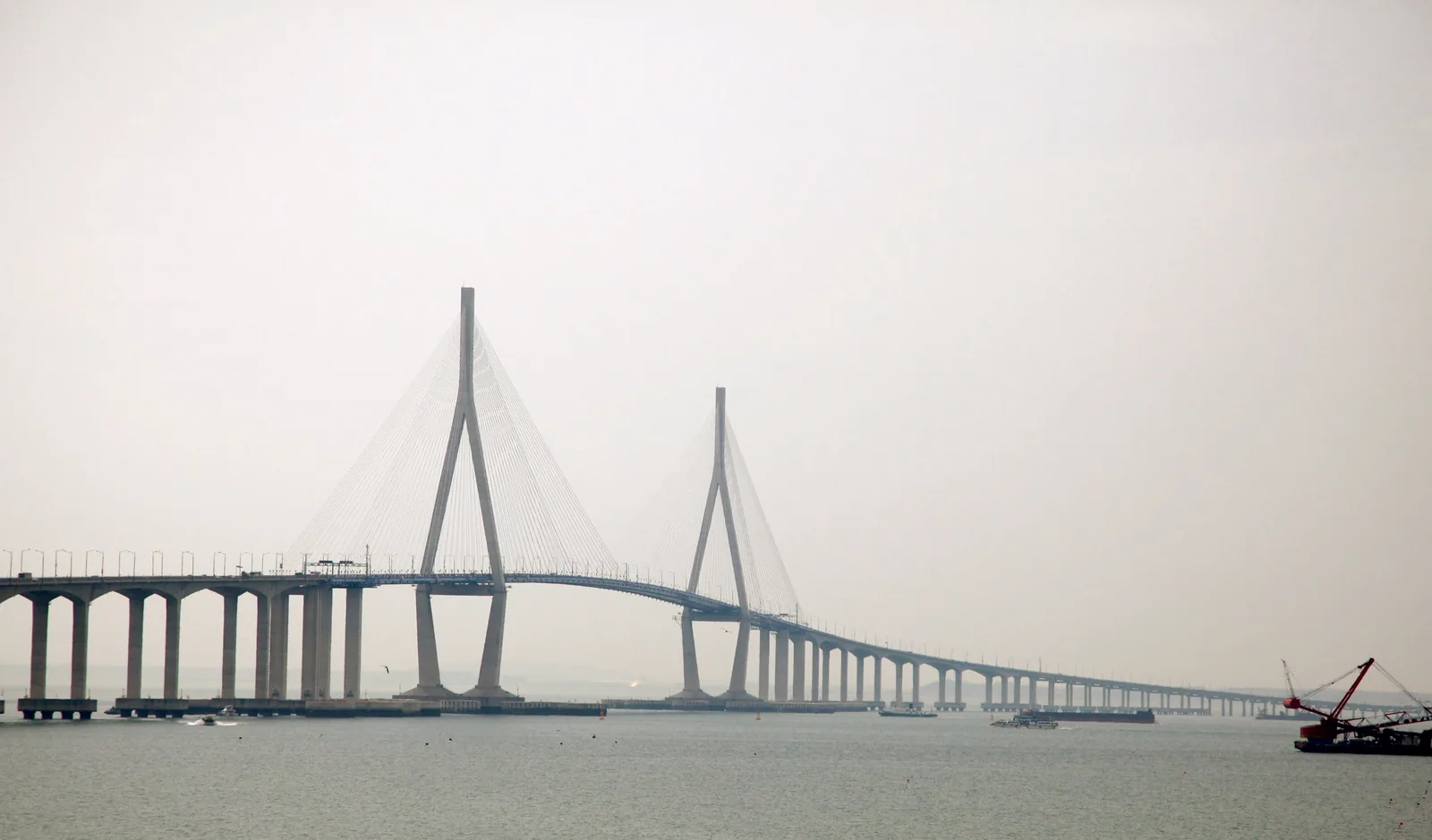
Across the water from the airport island is the city's newest face. KTO describes Songdo as a man-made island that presents a futuristic image, with Songdo Central Park, the first seawater park in the nation in KTO's words, at its heart and Songdo ConvensiA, opened in 2008, as its convention centre. Incheon Bridge, about 21 km long, has linked Songdo to Yeongjong since October 2009.
And then there is Ganghwado, which KTO calls an open-air museum, with sites from prehistoric dolmens to Goryeo and Joseon structures. The Ganghwa Dolmen Sites are part of a UNESCO World Heritage property inscribed in 2000; Jeondeungsa, inside Samnangseong Fortress, is said to have been built in 381; and the Goryeo court moved to the island in 1232 and stayed 39 years. Its sights are spread out and the buses from Seoul take well over an hour, so Ganghwa is a place to sleep, not to rush.
The four bases compared
Our rule: stay in Chinatown and Wolmido for a first visit and the island ferries; on Yeongjong for a flight or a beach sunset; in Songdo for business, conventions and a modern city; and on Ganghwado for heritage at a slower pace.
Chinatown, Wolmido and the Open Port is the all-round base, in the new Jemulpo-gu. Incheon Station, a terminus of Seoul Subway Line 1, opened in 1899; the Open Port Museum is about ten minutes on foot from its Exit 1, towards Chinatown, and Sinpo International Market six minutes from the same exit. Songwol-dong Fairy Tale Village and Jayu Park are part of the same quarter, and KTO's walking course runs about 4.71 km from Wolmido to Sinpo Market. The Wolmi Sea Train loops Wolmido in 42 minutes, and Yeonan Pier's island ferries are a 30–40-minute bus ride from Dongincheon. The trade-off is the airport: two changes of train away.
Yeongjong and the airport is the stay for flights and for the sea. The all-stop Airport Railroad reaches Unseo 14 minutes and Yeongjong 18 minutes after Terminal 2, on the airport's route diagram; the Express runs non-stop to Seoul Station and does not call at Unseo or Yeongjong. Eurwangni, Wangsan and Masian beaches have no station: bus 204 stops at Eurwangni, and a taxi covers the rest. Choose it for the night before a dawn check-in, or the night after a late landing.
Songdo International City is the stay for business and for Incheon's new skyline. Central Park's seawater canal and water taxis, the G-Tower's 33rd-floor observatory, Songdo Hanok Village and the Canal Walk are its sights, and ConvensiA its convention halls. Central Park Station is on Incheon Subway Line 1, which meets the Airport Railroad at Gyeyang and Seoul Subway Line 1 at Bupyeong, and KTO puts ConvensiA about 20 minutes from the airport by road.
Ganghwado is the stay for dolmens, temples and markets. Bus 3000 from Sinchon in Seoul and bus 90 from Bupyeong bring you to Ganghwa Bus Terminal, where circular bus 04 starts its loop and the Tasigyeo tour bus calls. Choose it for at least one night; the island is too spread out for a hurried day.
Two nights suit most trips: one by the open port, one on Yeongjong before you fly. With more time, add a night on Ganghwado, and swap in Songdo when a convention or a festival brings you to Incheon.
- Chinatown, Wolmido & the Open Port: the 1883 port quarter, the Wolmi Sea Train, Sinpo Market and Yeonan Pier's ferries; Seoul Subway Line 1 to Incheon Station.
- Yeongjong & the Airport: all-stop trains to Unseo and Yeongjong, and the Eurwangni, Wangsan and Masian beaches by bus 204 or taxi.
- Songdo International City: ConvensiA, Central Park, the G-Tower view and Songdo Hanok Village; Incheon Subway Line 1 to Central Park.
- Ganghwado: the UNESCO-listed dolmens, Jeondeungsa, Manisan and the Peace Observatory; buses 3000 and 90, circular bus 04 and the Tasigyeo tour bus.
New district names: Jemulpo-gu and Yeongjong-gu
On 1 July 2026 Incheon reorganised its districts, in what Incheon City calls its first major administrative restructuring in 31 years. The city went from two counties and eight districts to two counties and nine. Two of the new districts matter for this guide. Jemulpo-gu combines parts of Jung-gu and Dong-gu, and KTO now gives Chinatown, Jayu Park, Wolmido, the Fairy Tale Village, the Wolmi Sea Train and Yeonan Pier Jemulpo-gu addresses. Yeongjong-gu was separated from Jung-gu's Yeongjong area, and the airport's terminals and the Eurwangni and Masian beaches now carry Yeongjong-gu addresses. Geomdan-gu is new too, north of the Gyeongin Ara Waterway.
Songdo stays in Yeonsu-gu, and Ganghwado is still Ganghwa-gun. Many listings and older pages still say Jung-gu: treat a Jung-gu address in Chinatown or Wolmido as Jemulpo-gu, and one on the airport island as Yeongjong-gu.
Getting to Incheon: the airport and Seoul
From the airport, the Airport Railroad (AREX) is the backbone. KTO's airport transport guide, updated in 2026, gives the Express about 43 minutes from Terminal 1 to Seoul Station and about 51 minutes from Terminal 2, and the all-stop train about 59 and 66 minutes. Incheon City describes the Express as non-stop and the general trains as stopping at 13 stations, every 12 minutes. Inside Incheon, the all-stop train is the one you want: on the airport's route diagram, counting from Terminal 2, it reaches Terminal 1 at 6 minutes, Unseo at 14, Yeongjong at 18, Cheongna International City at 27, Geomam at 31 and Gyeyang at 37. Change at Geomam for Incheon Subway Line 2 and at Gyeyang for Incheon Subway Line 1.
Between the two terminals, the airport gives about 6 minutes by train, or a shuttle bus about every 10 minutes from 05:00 to 23:00. At Terminal 1, the airport's stop map shows Incheon-bound buses boarding outside exits 2–3 and 13–14. KTO adds two points for late arrivals: limousine buses take tickets bought in advance, not cash or transport cards on board, and most public transport into central Seoul stops around 23:30.
From Seoul, KTO's 2024 guide puts Incheon about an hour away by subway or bus. Seoul Subway Line 1 runs to Incheon Station, the end of the line in the open-port quarter, and Incheon City lists express Line 1 trains between Yongsan and Dongincheon and between Yongsan and Bupyeong. For Songdo, change at Bupyeong to Incheon Subway Line 1; KTO puts ConvensiA about 50 minutes from Seoul. For Ganghwado, take bus 3000 from Sinchon Station on Line 2: Ganghwa-gun's 2025 timetable gives every 30 minutes and 1 hour 20 minutes to 1 hour 50 minutes.
- Airport to Seoul Station by AREX Express: about 43 minutes from Terminal 1, about 51 from Terminal 2 (KTO, updated 2026).
- Terminal 2 to Unseo by all-stop train: 14 minutes; to Yeongjong, 18 (airport route diagram).
- Airport to Chinatown: AREX to Gyeyang, Incheon Subway Line 1 to Bupyeong, Seoul Subway Line 1 to Incheon Station (transfers listed by Incheon City).
- Airport to Songdo: about 20 minutes by road over Incheon Bridge (KTO); about 1 hour 30 minutes by public transport (KTO, 2023).
- Airport to Ganghwado: AREX to Geomam, then bus 90 to Ganghwa Bus Terminal (Ganghwa-gun).
- Seoul to Incheon: about an hour by subway or bus (KTO, 2024).
Getting around: Incheon's subway, bridges and island buses
Incheon has two subway lines of its own, run by the Incheon Transit Corporation. Line 1 runs from Geomdan Lake Park to Songdo Moonlight Festival Park, 33 stations and 37.1 km in 65 minutes end to end; its Songdo terminus opened on 12 December 2020, and its northern extension to Geomdan Lake Park on 28 June 2025. Line 2 runs from Geomdan Oryu to Unyeon, 27 stations and 29.1 km in 53.8 minutes, and has been open since 30 July 2016. Incheon City lists the key transfers: Line 1 meets Seoul Subway Line 1 at Bupyeong, Line 7 at Bupyeong-gu Office and the Airport Railroad at Gyeyang; Line 2 meets the Airport Railroad at Geomam.
Three bridges link the airport island across the water. Yeongjong Bridge, 4.4 km in KTO's figure, carries both highways and rail lines on its decks. Incheon Bridge, about 21 km long and open since October 2009, links Yeongjong with Songdo, and KTO says the crossing takes within 20 minutes. The Cheongna Sky Bridge, about 4.68 km, began operating on 5 January 2026 between Yeongjong and Cheongna International City; IFEZ says it is open to cars, pedestrians and cyclists, and Incheon City calls its main-tower deck, 184 m above sea level, the highest observation deck on a sea bridge worldwide.
On Ganghwado, the county's buses do the work. Ganghwa-gun lists these routes from Ganghwa Bus Terminal:
- Bus 3000 to Sinchon Station (Line 2) in Seoul, via Hapjeong and Hongik Univ. stations: every 30 minutes, 1 hour 20 minutes to 1 hour 50 minutes (2025).
- Bus 90 to Bupyeong Station via Geomam Station: every 15 minutes, 2 hours (2026).
- Circular bus 04 via Oepo, Hwado, Dongmak Beach, Hamheo Dongcheon and Jeondeungsa: 8 trips a day, a 1 hour 40 minute loop (2025).
- Tasigyeo tour bus, Thursday to Sunday, every 40 minutes from 09:40 to 17:20: Gapgot Dondae, Ganghwa Bus Terminal (Pungmul Market), Jungang Market, Hwamunseok Culture Center, the Peace Observatory and the Ganghwa History Museum.
Island ferries from Yeonan Pier
KTO calls Yeonan Pier, in Jemulpo-gu, the starting point for all coastal passenger ships bound for the numerous islands in the western sea, with the Incheon Fish Market nearby. The Incheon Port Authority's Coastal Ferry Terminal lists sailings to Baengnyeongdo, Daecheongdo and Socheongdo, Daeyeonpyeongdo and Soyeonpyeongdo, Deokjeokdo, Jawoldo, Ijakdo, Seungbongdo and Gureopdo. KTO's 2024 guide calls Baengnyeongdo Korea's northernmost island and puts it about 4 hours away by high-speed craft.
Getting to the pier is simple from the open-port quarter. Take Line 1 to Dongincheon and catch bus 12 or 24 from opposite the station, about 30–40 minutes, or bus 14 or 23 from Jemulpo Station, about 40–50 minutes; a taxi from Dongincheon is about 6 km and 20 minutes, the Port Authority says. Each day's sailing status is set at 06:30 on the morning of departure and depends on the weather, so sleep in Chinatown or Wolmido the night before and be ready to go.
Yeongjong has island boats of its own. Incheon City's 2025 feature says boats from Sammok Wharf reach Sindo, Sido and Modo, and KTO's 2024 guide puts Sinsimodo, with its beach sculpture garden, 10 minutes from Yeongjongdo.
Ganghwa's dolmens, World Heritage since 2000
UNESCO inscribed the Ganghwa Dolmen Sites in 2000, at the 24th session of the World Heritage Committee, as part of a World Heritage property, on the basis of criterion (iii). UNESCO describes the Ganghwa sites, 12.27 ha, as lying on the offshore island of Ganghwa on mountain slopes, and calls those at Bugeun-ri and Gocheon-ri stylistically early.
KTO counts over 160 dolmens from the Bronze Age at the Ganghwa Dolmen Site and names the Bugeun-ri dolmen the most representative: a table-styled dolmen with a huge cover stone resting on two supporting stones. Incheon Tour adds that Bugeun-ri has 16 dolmens, including one whose cover stone is 7.1 m long and weighs 75 tons, with a trail to 12 more, and that the Ganghwa History Museum beside it shows excavated artefacts and a diorama of how a dolmen was built. The Tasigyeo tour bus stops at the museum, Thursday to Sunday. Stay on the island, and pair the dolmens with the Peace Observatory on the same loop, then Jeondeungsa the next morning.
Festivals and seasons
Incheon's biggest summer event is the Incheon Pentaport Rock Festival at Songdo Moonlight Festival Park. In 2026 it ran from Friday 31 July to Sunday 2 August, hosted by Incheon Metropolitan City; KTO's 2026 summer festival list called it Korea's largest outdoor music festival and noted that tickets sell fast, and the festival warned of heavy congestion around the venue. Songdo is the base for it: book as soon as the next dates are announced.
The rest of the year follows the seasons, by the official listings:
- April: Jayu Park's cherry blossom festival, held every April, KTO says.
- From mid-September: red spider lilies at Jeondeungsa on Ganghwado (Incheon Tour).
- October: the Ganghwa Shrimp Festival (Ganghwa-gun) and the Ganghwa Goryeo Ginseng Festival (KTO).
- All year: sunsets at Eurwangni Beach, which KTO lists as open 24 hours, all year, and on Seongmodo, which KTO's 2024 guide says is known for sunsets.
Every Incheon area guide
- Yeongjong & the AirportAirport-side nights for first and last flights, with sunset beaches on the same island.
- Chinatown, Wolmido & the Open PortIncheon's 1883 open port: Chinatown, Wolmido's sea train and the island ferries.
- Songdo International CityIncheon's new city: a seawater park, a 33rd-floor view and ConvensiA's halls.
- GanghwadoDolmens, Jeondeungsa and Manisan's altar: Incheon's island of heritage, by bus.
Questions visitors ask
Where should I stay in Incheon for a first visit?
In Chinatown and Wolmido, by Incheon Station. This is the port that opened in 1883: Chinatown, Jayu Park, Songwol-dong Fairy Tale Village and the Open Port Museum are in the same quarter, the Wolmi Sea Train loops Wolmido, and Incheon Station is a terminus of Seoul Subway Line 1. KTO's walking course runs about 4.71 km from Wolmido to Sinpo International Market.
Where should I stay in Incheon before an early flight?
On Yeongjong, near Unseo or Yeongjong Station. The all-stop Airport Railroad reaches Unseo 14 minutes after leaving Terminal 2 and Yeongjong 18 minutes, on the airport's route diagram, and Terminal 1 is 6 minutes from Terminal 2. KTO notes that most public transport into central Seoul stops around 23:30, so a late landing is a good reason to stay too.
Where should I stay in Incheon for business?
In Songdo. ConvensiA, opened in 2008, has an exhibition hall for up to 900 booths, two ballrooms and 35 meeting rooms, and KTO calls it the ideal venue for MICE. Central Park Station is on Incheon Subway Line 1, and KTO puts ConvensiA about 20 minutes from the airport by road and about 50 minutes from Seoul.
What changed in Incheon's districts in July 2026?
On 1 July 2026 Incheon created new districts, going from two counties and eight districts to two counties and nine. Chinatown, Wolmido, Jayu Park and Yeonan Pier are now in Jemulpo-gu, made from parts of Jung-gu and Dong-gu; the airport and the Yeongjong beaches are in Yeongjong-gu. Songdo stays in Yeonsu-gu and Ganghwado in Ganghwa-gun.
How do I get to Incheon's islands?
From Yeonan Pier, which KTO calls the starting point for all coastal passenger ships to the islands of the western sea. Buses 12 and 24 from opposite Dongincheon Station take about 30–40 minutes, the Incheon Port Authority says, and sailing status is set at 06:30 on the day. For Sindo, Sido and Modo, boats leave from Sammok Wharf on Yeongjong (Incheon City).
Can I visit Ganghwado as a day trip from Seoul?
You can, but a night is better. Bus 3000 from Sinchon takes 1 hour 20 minutes to 1 hour 50 minutes each way by Ganghwa-gun's 2025 timetable, and the sights are spread out: the county's circular bus 04 takes 1 hour 40 minutes, and the Tasigyeo tour bus runs only Thursday to Sunday. Stay over and split the dolmens and the Peace Observatory from Jeondeungsa.
Sources & review
Editorial review: · Korea Standard Time
- VISITKOREA — Must-have items in Incheon (2024)
- VISITKOREA — Savor Incheon (2025)
- Incheon International Airport — History
- VISITKOREA — Yongyudo Island
- VISITKOREA — Incheon International Airport Terminal 2
- Incheon International Airport — Contact and location
- VISITKOREA — Incheon Chinatown
- Incheon Metropolitan City — The open port area
- VISITKOREA — Jayu Park
- Former Jung-gu Office, Incheon — Incheon Station
- Former Jung-gu Office, Incheon — Incheon Open Port Museum
- VISITKOREA — Sinpo International Market (2023)
- VISITKOREA — Wolmido to Sinpo Market walking course
- VISITKOREA — Wolmi Sea Train
- VISITKOREA — Songdo Central Park
- VISITKOREA — Songdo ConvensiA
- VISITKOREA — Songdo International City
- VISITKOREA — Songdo Café Street and Central Park (2023)
- VISITKOREA — Eurwangni Beach
- VISITKOREA — Wangsan Beach
- VISITKOREA — Masian Beach
- VISITKOREA Accessible Travel — Eurwangni Beach
- VISITKOREA — Jeondeungsa Temple
- Incheon Tour — Ganghwa history (2026)
- Incheon Metropolitan City — Restructuring takes effect (June 2026)
- Incheon Metropolitan City — New districts from 1 July 2026
- Incheon Metropolitan City (Korean) — Geomdan-gu (2025)
- VISITKOREA — Airport Transportation Guide (updated 2026)
- Incheon Metropolitan City — Subway
- Incheon International Airport — Airport Railroad (AREX)
- Incheon International Airport — Moving between terminals
- Incheon International Airport — Terminal 1 bus stops
- Incheon Transit Corporation — General information
- Incheon Transit Corporation — History
- VISITKOREA — Yeongjong Grand Bridge
- VISITKOREA — Incheon Bridge
- Incheon Metropolitan City — Incheon's bridges and islands (December 2025)
- IFEZ — Cheongna Sky Bridge opens (January 2026)
- Ganghwa-gun — Bus 3000
- Ganghwa-gun — Bus 90
- Ganghwa-gun — Circular bus 04
- Ganghwa-gun — Tasigyeo city tour bus
- VISITKOREA — Yeonan Pier
- Incheon Port Authority — Coastal Ferry Terminal destinations
- Incheon Port Authority — Coastal liner operation
- Incheon Port Authority — Coastal Ferry Terminal access
- UNESCO World Heritage Centre — Decision 24 COM X.C.1
- UNESCO World Heritage Centre — Property 977
- VISITKOREA — Ganghwa Dolmen Site
- Incheon Metropolitan City — Incheon Pentaport Rock Festival 2026 notice
- VISITKOREA — Top 10 Summer Festivals for 2026
- Incheon Pentaport Rock Festival — Entry and exit notice (2026)
- Ganghwa-gun — Ganghwa Shrimp Festival
- VISITKOREA — Ganghwa Goryeo Ginseng Festival