
Gyeongju · Area guide
Bulguksa
불국사
Sleep at the temple end of Gyeongju and be at Seokguram for the 09:00 opening.
The short answer
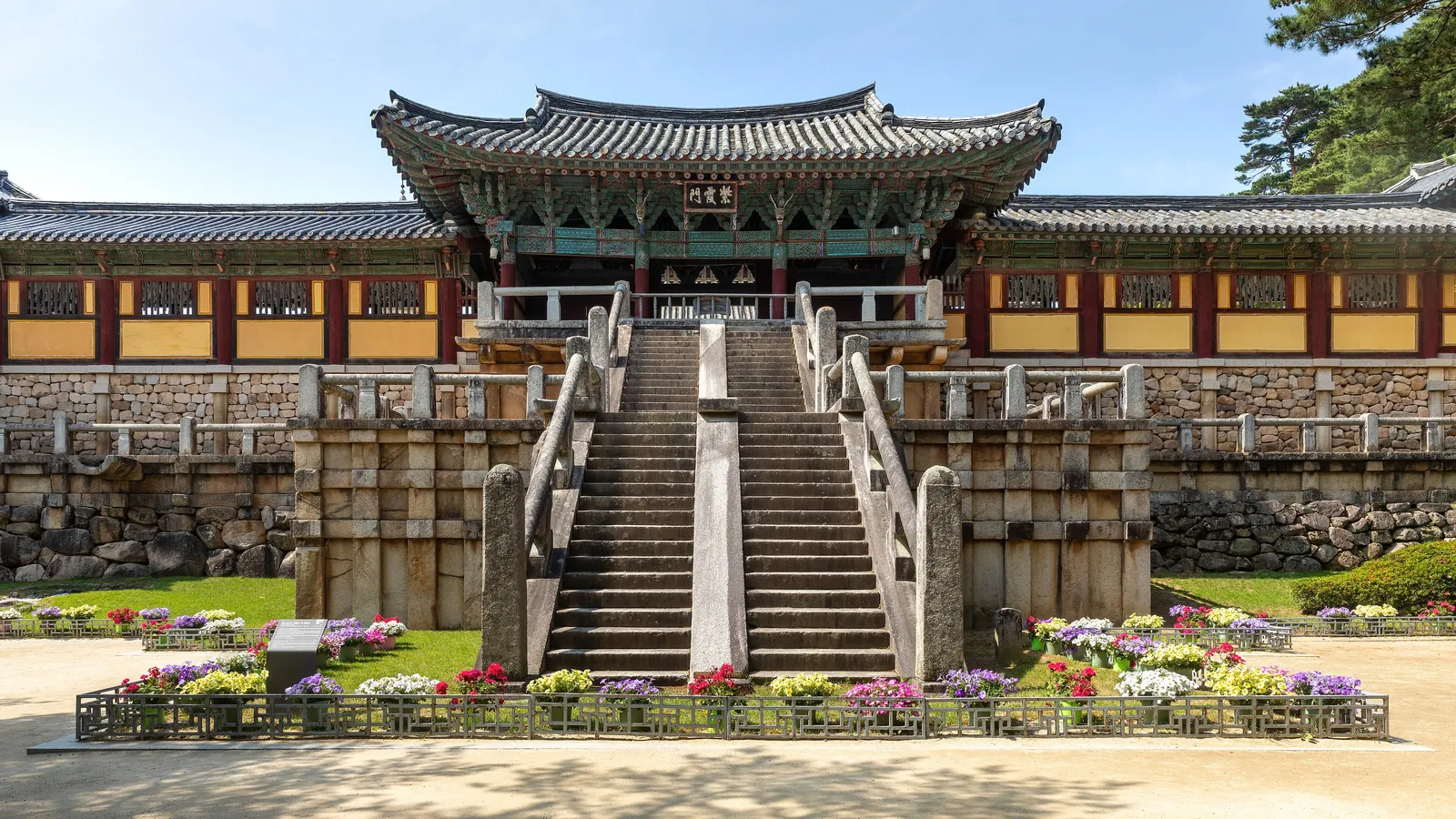
Stay at Bulguksa if the temples are the reason you came. Bulguksa, which VisitKorea calls a representative relic of Silla Buddhist culture and which holds seven national treasures, and Seokguram Grotto, 3 km up the hiking trail, were inscribed together by UNESCO in December 1995 as a religious architectural complex of exceptional significance. Both open at 09:00. Sleeping here turns them into a morning walk instead of a bus journey from town.
Bulguksa is the end of the line, and that works in its favour. Buses 10 and 11 turn here after Bomun Lake, bus 12 climbs to Seokguram, and routes 700 and 711 run direct from Gyeongju Station (KTX, formerly Singyeongju). The trade-off is the night: Wolji Pond takes last visitors at 21:30 and the last bus 10 or 11 leaves the downtown terminals at 21:40, so an evening in the old town ends with a taxi.
Best for
- Seokguram and Bulguksa at opening time
- Temple and hiking trips
- Arrivals by KTX
- Pairing the temples with Bomun Lake
Think twice if
- Night sights in the old town
- Hwangnidan-gil cafés and evenings out
- Short stays built around Daereungwon
Getting here
| Station | Lines |
|---|---|
| Gyeongju Station (KTX) | Buses 700, 711 |
| Bulguksa | City buses 10, 11 (route turns here) · Bus 12 · Buses 700, 711 |
| Bulguksa Ticket Office | Bus 12 (to Seokguram) |
| Seokguram Car Park | Bus 12 |
From Gyeongju Station (KTX)
Routes 700 and 711 run direct. Route 711, added in February 2023, goes from the station via Tongiljeon and the closed Bulguk Station to Bulguksa 10 times a day; the first leaves the station at 07:07, and the last return leaves Bulguk Rotary at 21:22. Route 700, the original direct bus, stops at Bulguksa too, and it is the route VisitKorea gives KTX passengers for the temple.
From Seoul
Take the KTX from Seoul Station to Gyeongju Station, around two hours, then route 700 or 711; SRT tickets are sold to the same station. By express bus from Seoul Express Bus Terminal, you arrive at Gyeongju Express Bus Terminal downtown and ride bus 10 or 11 to the end of the route at Bulguksa.
From Busan
The express bus from Busan Central Bus Terminal, at Nopo Station on Busan Metro Line 1, reaches Gyeongju Express Bus Terminal in about 50 minutes; from there, bus 10 or 11 runs to Bulguksa. By rail, KTX-Eum trains on the Donghae Line have stopped at Gyeongju since 30 December 2025, coming from Bujeon, and routes 700 and 711 continue from the station to the temple.
From Gimhae Airport
VisitKorea gives the intercity bus from Gimhae Airport to Gyeongju Intercity Bus Terminal as about an hour. Buses 10 and 11 start at the terminal, run about every 20 minutes and finish at the Bulguksa stop, about seven minutes on foot from the temple ticket office.
On your doorstep
- Bulguksa Temple At 385 Bulguk-ro, open 09:00–18:00 all year. Rebuilt by Kim Dae-seong, damaged in the Imjin War of 1592–1598 and restored from 1920, it holds seven national treasures; Korea Heritage describes it as the place where Silla people manifested their vision of an ideal world on earth.
- Seokguram Grotto Built by Kim Dae-seong under King Gyeongdeok (742–765) on the slopes of Mount Toham, its seated Buddha faces the East Sea. Opens at 09:00, with viewing until 19:00, at 238 Seokgul-ro.
- Seokguram hiking trail The trail from Bulguksa to the grotto is 3 km, against 9 km by road.
- Bus 12 to Seokguram Runs from the Bulguksa and Bulguksa Ticket Office stops to the Seokguram car park, about three minutes' walk from the grotto ticket office.
- Bomunho Lake Buses 10 and 11 link Bulguksa and Bomun directly; the man-made lake is open 24 hours and ringed by cherry blossoms in spring.
- Gyeongju World The amusement park on Bomun-ro, with a summer water park and a winter snow park, is on the same bus 10 and 11 route.
- Bunhwangsa Temple Further along buses 10 and 11 towards town, and part of the UNESCO Hwangnyongsa Belt.
- Daereungwon and Cheomseongdae Buses 10 and 11 run on to the Wolseong-dong Community Centre stop, the one for Cheomseongdae and Daereungwon.
- Donggung Palace & Wolji Pond Gyeongju's signature night view, open until 22:00 with last admission at 21:30.
One easy day from here
- Morning Be at Seokguram for its 09:00 opening, by bus 12 or on foot up the 3 km trail.
- Late morning Come back down to Bulguksa, open 09:00–18:00, and give its courtyards and seven national treasures the rest of the morning.
- Afternoon Take bus 10 or 11 to Bomun Lake, or ride on to the Wolseong-dong Community Centre stop for Cheomseongdae and Daereungwon.
- Evening See Donggung Palace & Wolji Pond lit up before the 21:30 last admission, then take a taxi back to the temple end of the city.
Before you book
- Book within walking distance of the Bulguksa bus stop: it is the turning point of buses 10 and 11 and about seven minutes on foot from the temple ticket office.
- Planning to hike? The trail to Seokguram is 3 km. Bus 12 runs up to the grotto car park, so walk up and ride down, or the other way round.
- Arriving by KTX, route 711 is the one to know: 10 trips a day from 07:07, via Tongiljeon to Bulguksa, alongside the original route 700.
- Save the night view for a dedicated evening: Wolji Pond takes last visitors at 21:30 and the last bus 10 or 11 leaves the downtown terminals at 21:40, so the ride home is a taxi.
- With two or more nights, split them: one here for the temples at opening time, one in the old town for Wolji Pond on foot.
Questions visitors ask
How far is Seokguram from Bulguksa?
3 km by the hiking trail and 9 km by road. Bus 12 runs from the Bulguksa stops to the Seokguram car park, and the ticket office is about three minutes' walk from there. Seokguram opens at 09:00. Walk up and ride down, or the other way round.
Can I get to Bulguksa straight from the KTX station?
Yes. Routes 700 and 711 run direct from Gyeongju Station (KTX) to Bulguksa. Route 711 makes 10 trips a day, the first leaving the station at 07:07. Route 700, the original direct bus, also stops at Bulguksa, and since 2023 the corridor has had a bus about every 30 minutes.
Are Bulguksa and Seokguram UNESCO World Heritage Sites?
Yes. They were inscribed together in December 1995, Seokguram then under the old spelling Sokkuram, with the name changed in 1999. UNESCO calls the pair a religious architectural complex of exceptional significance. VisitKorea gives the date as 6 December 1995, and Seokguram's seated Buddha looks out towards the East Sea.
Is Bulguksa a good base for a first visit?
For a temple-first trip, yes: Seokguram and Bulguksa are on your doorstep and buses 10 and 11 reach Bomun and the old town. If the night views at Wolji Pond and the tombs of Daereungwon are your priority, stay in the old town instead.
Sources & review
Editorial review: · Korea Standard Time
- VISITKOREA — Bulguksa Temple
- VISITKOREA — Seokguram Grotto
- UNESCO World Heritage Centre — Seokguram Grotto and Bulguksa Temple
- UNESCO World Heritage Centre — Republic of Korea: documents
- Visit Korean Heritage Campaign — Gyeongju heritage road
- Gyeongju City — New bus routes 710 and 711 (February 2023)
- Korea Tourism Organization — Bulguksa and Seokguram by bus (Korean)
- Gyeongju City — Travel Gyeongju by bus
- Gyeongju City — KTX station connecting transport (notice)
- VISITKOREA — Bomunho Lake
- VISITKOREA — Gyeongju World
- UNESCO World Heritage Centre — Gyeongju Historic Areas
- VISITKOREA — Gyeongju Donggung Palace and Wolji Pond
- VISITKOREA — Gyeongju, the museum without walls
- Gyeongju City — Transportation (English site)
- Busan Metropolitan City — Public transportation
- VISITKOREA — Donghae Line KTX-Eum, Gangneung to Busan
- Gyeongju City — Singyeongju Station renamed Gyeongju Station (press release, 28 December 2023)