
Ulsan · Where to stay
Where to stay in Ulsan
울산 숙소 지역
Ulsan is three trips in one city: a river garden at its heart, a rocky coast with Daewangam and Ganjeolgot, and the mountains of Ulju-gun and its petroglyphs, a UNESCO World Heritage site since July 2025. You have four bases: Taehwagang and the city centre, Ilsan Beach and Daewangam, Ganjeolgot and Jinha, or KTX Ulsan Station and Eonyang. Here is the quick answer for each trip, then everything behind it.
Quick pick
| Your trip | Stay in | Why |
|---|---|---|
| First visit | Taehwagang & the City Centre | The national garden, the Simni bamboo grove and the old downtown, with KTX-Eum and the Busan metro at Taehwagang Station. |
| Travelling without a car | Taehwagang & the City Centre | Trains to Busan and Gyeongju from Taehwagang Station, and limousines 5001 and 5003 to KTX Ulsan Station (Ulsan City's 2021 list). |
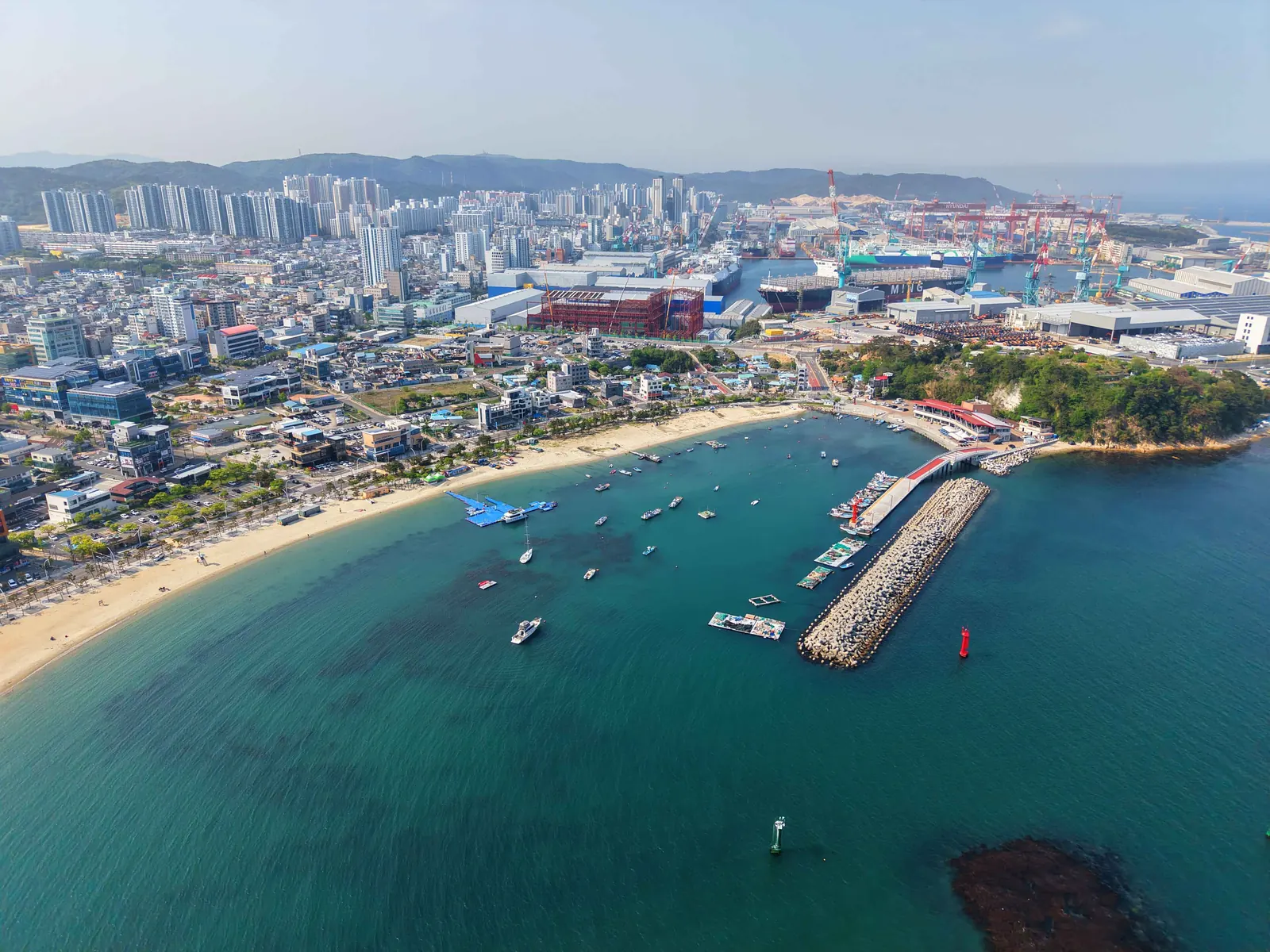
| Beach and sea views | Ilsan Beach & Daewangam | A sandy beach close to Daewangam Park's pine trail, dragon-shaped rock and Ulgi Lighthouse. |
| Families | Ilsan Beach & Daewangam | Ulsan City says Ilsan Beach's shallow water suits families, and Daewangam Park has its own campground. |
| Whales | Ilsan Beach & Daewangam | Ulsan City's coast tour pairs Daewangam with Jangsaengpo's whale village and whale museum. |
| New Year sunrise | Ganjeolgot & Jinha | VisitKorea and Ulsan City call it the first place on the Korean Peninsula to see the sunrise, with a festival from sunset on 31 December. |
| Summer beach road trip | Ganjeolgot & Jinha | Jinha Beach's clear water, pines and windsurfing, for travellers with a car, as VisitKorea advises. |
| Early or late fast trains | Ulsan Station & Eonyang | The KTX from Seoul Station and the SRT from Suseo stop at KTX Ulsan Station. |
| Petroglyphs and the Yeongnam Alps | Ulsan Station & Eonyang | Eonyang, the Bangucheon petroglyphs and the Yeongnam Alps Complex Welcome Center are all in Ulju-gun. |
Why stay the night in Ulsan
Ulsan's sights sit in three different landscapes, and each deserves its own night. The first is the river. At the heart of the city, VisitKorea writes, is Taehwagang National Garden, stretching along the Taehwagang River; it was recognised as Korea's second national garden in 2019. Its Simni bamboo grove runs about 4 km along the bank, VisitKorea lists it as open 24 hours, and after dark it becomes a night garden called the Milky Way Trail. The old downtown around Jungang Market has the Keunaegi Night Market, Ulsan's first permanent night market in Ulsan City's words.
The second is the coast. Daewangam Park has a trail through what Ulsan City calls a 100-year-old pine grove, a dragon-shaped rock joined to the mainland by an iron bridge, and Ulgi Lighthouse, first lit in 1906 and, in Dong-gu's words, the first on Korea's East Sea coast. Ilsan Beach, close to the park, is a sandy beach with shallow water for families. Along the coast, VisitKorea and Ulsan City call Ganjeolgot the first place on the Korean Peninsula to see the sunrise, and Jinha Beach is its summer partner.
The third is Ulju-gun's hills: Eonyang's walled town and bulgogi, the Yeongnam Alps, which VisitKorea says are covered with silver grass every autumn, and, since 12 July 2025, the Petroglyphs along the Bangucheon Stream, Ulsan's UNESCO World Heritage site. No single base puts all three on your doorstep, which is why we split Ulsan into four.
Time your trip by the festival calendar, from Ulsan City's seasonal listings and the district offices:
- May: the Taehwagang Spring Flower Festival and the Taehwa River International Jazz Festival at the national garden, the Ulsan Grand Park Rose Festival, the Ulsan Onggi Festival at Oegosan Onggi Village and the Ulsan Soeburi Festival at the Dalcheon Iron Mine.
- June: the Ulsan Maduhee Festival, a 300-year-old tug-of-war tradition, on Culture Street in Jung-gu.
- July: the Ulsan Shipbuilding & Sea Festival at Ilsan Beach.
- September: the Ulju Mountain Film Festival at the Yeongnam Alps Complex Welcome Center.
- October: the Ulsan Whale Festival at Jangsaengpo.
- December to January: the Ulsan Grand Park Light Festival; the Ganjeolgot Sunrise Festival on 31 December to 1 January; and Dong-gu's Daewangam Sunrise Festival on 1 January.
The four bases compared
Our rule: stay by the Taehwagang for a first visit or a trip without a car; at Ilsan Beach for the sea and Daewangam; at Ganjeolgot and Jinha for a sunrise night with a car; and by KTX Ulsan Station for fast trains, the petroglyphs and the Yeongnam Alps.
Taehwagang and the city centre is the all-round base. The national garden and the bamboo grove line the river, Taehwaru Pavilion stands on it, the old downtown around Jungang Market has the night market, and Ulsan City's downtown tour adds Culture Street, Ulsan Keunaegi House and the Koboksu Music Salon. Taehwagang Station is the rail hub for Busan and Gyeongju: the Donghae Line metro from Bujeon and the Donghae Line KTX-Eum from Gangneung. The Jungang Line KTX-Eum from Seoul's Cheongnyangni runs via Ulsan, and Korail held an opening-day welcome event at Taehwagang Station. Limousines 5001 and 5003 on Ulsan City's 2021 list link the centre to KTX Ulsan Station. The trade-off is the sea, which is a ride away.
Ilsan Beach and Daewangam is the stay for the coast. Dong-gu describes Ilsan Beach as a semicircular sandy beach with clean, cold water, close to Daewangam Park; the park adds the pine trail, the 303 m suspension bridge, Daewangam Rock, Ulgi Lighthouse and Seuldo Island at sunset, and the Ulsandaegyo Observatory gives the night view. Jangsaengpo's whale village is in neighbouring Nam-gu. Limousine 5002 stops at Ilsan Beach on Ulsan City's 2021 list; otherwise, plan on taxis.
Ganjeolgot and Jinha is a sunrise-and-beach stay for drivers. VisitKorea says there isn't a lot of public transport to the area and that it is a good idea to take a car. Come for the Hope Post Box, the lighthouse and the dawn, for Jinha Beach in summer, and for the 10 km Ganjeolgot Somang-gil trail. It is the wrong base for the rest of the city.
KTX Ulsan Station and Eonyang is the stay for fast trains and Ulju-gun. The KTX and SRT from Seoul stop here, all five limousine routes on Ulsan City's 2021 list run from the station, and Eonyang, the petroglyphs and the Yeongnam Alps are a drive away. Choose it for an early train, a hiking trip or a day with the petroglyphs.
Two nights is a good shape for most trips: one by the river, one on the coast. With a car, swap the coast night for Ganjeolgot at New Year, and add a night by KTX Ulsan Station for the Alps.
- Taehwagang & the City Centre: the national garden, the bamboo grove, the old downtown and Taehwagang Station's trains to Busan and Gyeongju.
- Ilsan Beach & Daewangam: a family beach, Daewangam Park, Seuldo Island and Jangsaengpo's whales nearby; limousine 5002 (Ulsan City, 2021) or taxi.
- Ganjeolgot & Jinha: the New Year sunrise, the Hope Post Box and Jinha Beach; bring a car.
- Ulsan Station & Eonyang: KTX and SRT trains, Eonyang bulgogi, the Yeongnam Alps and the Bangucheon petroglyphs; drive to the sights.
Getting to Ulsan
From Seoul, the fastest trains are the KTX from Seoul Station and the SRT from Suseo, both to KTX Ulsan Station. Ulsan City's transport page, last updated in 2021, has the first southbound KTX leaving Seoul at 5:15 and arriving at 7:29, and the last leaving at 22:30 and arriving at 0:42. Since 20 December 2024 there has also been a KTX-Eum on the Jungang Line from Cheongnyangni, running via Wonju, Jecheon, Andong, Gyeongju and Ulsan to Bujeon in Busan; Korail launched it with six trains a day, three each way, and held one of its opening-day welcome events at Taehwagang Station. By road, Ulsan City's 2021 figures give about 4 hours 10 minutes by express bus from Seoul, every 30 to 40 minutes, to Ulsan Express Bus Terminal at 288 Samsan-ro, Nam-gu.
From Busan, take the train from Bujeon. The Donghae Line metro opened all the way to Taehwagang on 28 December 2021; Busan City's 2022 figure is 76 minutes from Bujeon to Taehwagang, with trains every 15 minutes at peak times and every 25 to 30 minutes off-peak, and VisitKorea's 2026 guide says around 80 minutes. The same guide gives about 40 minutes by KTX-Eum. Busan City notes that Ulsan begins at Seosaeng Station, so the last stretch of the line runs through Ulsan.
From Gyeongju, take the KTX-Eum. The Donghae Line KTX-Eum between Gangneung and Busan began running on 30 December 2025, VisitKorea reports, with stops including Gyeongju, Taehwagang and Bujeon and six trains a day, three each way. The Jungang Line KTX-Eum from Cheongnyangni also runs via Gyeongju and Ulsan. The Busan metro does not reach Gyeongju: Taehwagang is the end of its line.
From Gimhae International Airport in Busan, VisitKorea's 2026 guide says you can buy tickets at the airport for intercity buses to Ulsan. The rail alternative runs through Bujeon, with KTX-Eum and the Donghae Line metro on to Taehwagang Station.
Ulsan Airport, at 1103 Saneop-ro in Buk-gu, has flights of its own. Ulsan City's 2021 transport page lists flights from Gimpo of about an hour, and limousine 5005 on Ulsan City's 2021 list calls at the airport on its way to KTX Ulsan Station.
- Seoul Station to KTX Ulsan Station: first KTX 5:15, arriving 7:29 (Ulsan City, 2021); SRT from Suseo.
- Cheongnyangni via Ulsan to Bujeon: KTX-Eum on the Jungang Line since 20 December 2024 (Korail).
- Bujeon to Taehwagang: about 40 minutes by KTX-Eum (VisitKorea, 2026); 76 minutes by Donghae Line metro (Busan City, 2022), around 80 by VisitKorea's 2026 figure.
- Gyeongju to Taehwagang: KTX-Eum on the Donghae Line since 30 December 2025 (VisitKorea).
- Gimhae Airport: intercity bus tickets to Ulsan on sale at the airport (VisitKorea, 2026).
- Seoul by express bus: about 4 hours 10 minutes (Ulsan City, 2021).
- Gimpo to Ulsan Airport: about an hour by air (Ulsan City, 2021).
Getting around: limousines, trains and a car
In the city, Taehwagang Station is the rail hub: the Donghae Line metro to Busan, and KTX-Eum trains to Gyeongju and Busan. KTX Ulsan Station handles the KTX and SRT to Seoul and Suseo, and the limousines tie the two together: on Ulsan City's 2021 list, route 5001 calls at both.
For the coast and the mountains, drive. VisitKorea says public transport to Ganjeolgot is limited and advises a car, and puts Ganjeolgot Lighthouse 20 minutes from the entrance to the Ulsan Nambu Beltway. The petroglyphs, Eonyang and the Yeongnam Alps are spread across Ulju-gun, from Eonyang-eup and Dudong-myeon to Sangbuk-myeon. Without a car, base yourself by the Taehwagang and take a taxi to Ilsan Beach and the rest of the coast.
Ulsan's KTX limousine buses, in Ulsan City's words, run between KTX Ulsan Station and major areas in the city. Ulsan City's 2021 list names five routes, with their hours and frequencies; it gives no journey times. These are the stops it names:
- 5001 (every 20 minutes, 04:00–24:00): Kkotbawi, Hwaam Middle School, Hyundai Mipo Dockyard, Taehwagang Station, Boram Hospital, City Hall and Mugeo Covered Stream.
- 5002 (every 26 minutes, 04:00–24:00): Kkotbawi, Ilsan Beach, Hyundai Heavy Industries Ulsan University Hospital, the Hyundai Motors Ulsan Plant front gate and Jung-gu Office.
- 5003 (every 30 minutes, 04:25–23:25): Byeongyeong Sageori, Hakseong Park, New Jungang Market, Seongnam-dong, Taehwaru Pavilion and Taehwa-dong.
- 5004 (every 30 minutes, 04:00–24:00): Namchanggo, Onsan-eup Community Service Center, the S-Oil entrance, Ulsan District Court and the University of Ulsan front gate.
- 5005 (every 30 minutes, 04:05–24:00): Dalcheon, Ulsan Airport, Sincheon, Ulsan Technopark and Cheonsangilgyo Sageori.
The Bangucheon petroglyphs, World Heritage since 2025
On 12 July 2025, at the 47th session of the World Heritage Committee in Paris, UNESCO inscribed the Petroglyphs along the Bangucheon Stream on the World Heritage List, by decision 47 COM 8B.20, under criteria (i) and (iii). The Ministry of Foreign Affairs noted in July 2025 that this brought Korea's World Heritage properties to 17.
UNESCO describes rock art along about three kilometres of the meandering Bangucheon Stream, on the south-eastern coast of the Korean Peninsula, in a landscape of stratified cliffs. There are two rock panels, the Daegok-ri Petroglyphs and the Cheonjeon-ri Petroglyphs, and the carvings were made from 5,000 BCE to the 9th century CE. UNESCO's first criterion singles out prehistoric images of whales and certain stages of whaling. Korea's culture ministry webzine adds finback and gray whales and the people hunting them, a subject only rarely represented in rock art around the world, and VisitKorea says the Bangudae petroglyphs stand out for their vivid and detailed depiction of a whale hunt.
Both panels are in Ulju-gun: Daegok-ri in Eonyang-eup and Cheonjeon-ri in Dudong-myeon, by VisitKorea's addresses. Ulsan City says the Cheonjeon-ri engravings were discovered in 1970. The Ulsan Petroglyph Museum, which Ulsan City calls the country's only petroglyph museum, shows life-size models of both panels at 254 Bangudaean-gil, Dudong-myeon, and VisitKorea also lists the Ulsan Daegok Museum nearby. Stay by KTX Ulsan Station or in Eonyang, drive out, and pair the petroglyphs with Eonyang bulgogi for lunch.
Whales: Jangsaengpo and the Ulsan Whale Festival
Ulsan's whales run from the petroglyphs to the twentieth century. VisitKorea's 2024 guide calls Jangsaengpo, in Nam-gu, the home of Korean whaling tradition, and its 2026 guide describes the Jangsaengpo Whale Culture Village as a themed village that brings back the Jangsaengpo of the 1970s, when it was, in VisitKorea's words, Korea's largest whaling port. The village opened in 2015 and is open 09:00–18:00, to 20:00 at weekends; it closes on Mondays and on the Seollal and Chuseok holidays.
The Jangsaengpo Whale Museum, which Ulsan City calls Korea's only museum dedicated to whales, covers whaling history until 1986 and, VisitKorea says, displays a 10 m whale skeleton and whaling tools. It is open 09:00–18:00 and closes on Mondays, Seollal and Chuseok. Ulsan City lists a whale-watching ferry from April to October and the Jangsaengpo Monorail, a 1.3 km loop.
The Ulsan Whale Festival is held at Jangsaengpo every October, says Ulsan City. In 2026 the 30th festival ran from 15 to 18 October at 244 Jangsaengpogorae-ro, hosted by the Nam-gu Office and organised by the Whale Culture Foundation, whose site announces that the 2026 festival has ended; the dates of the 31st had not been published at the end of October 2026. Ulsan City's coast tour groups Jangsaengpo with Daewangam, so the Ilsan Beach and Daewangam base suits a whale day.
Ulsan, the industrial city
Ulsan City's own tourism site lists the city's industry as a sight. The Hyundai Motor Ulsan Plant, at 700 Yeompo-ro in Buk-gu, stands on a 5-million-square-metre site with an annual production capacity of 1.41 million cars, says Ulsan City. The Hyundai Heavy Industries Shipyard, on about 7 million square metres in Dong-gu, holds, in Ulsan City's words, a unique record in the world's shipbuilding history, and Hyundai Mipo Dockyard, founded in 1975, is also in Dong-gu. The Petrochemical Complex and the Onsan National Industrial Complex cover about 20.47 million square metres, which Ulsan City calls a core facility in the chemical industry.
For visitors, the Ulsan Port Public Information Hall has a 12th-floor observatory over the port, open on weekdays only, 09:00–18:00. The Ulsandaegyo Observatory looks over Ulsandaegyo, which Ulsan City calls the longest single-span suspension bridge in Korea, and opens 09:00–21:00, closed on the second and fourth Mondays, New Year's Day and Chuseok. In July, the Ulsan Shipbuilding & Sea Festival at Ilsan Beach, which Ulsan City calls the country's only festival celebrating shipbuilding and the bounty of the sea, includes a tour of Hyundai Heavy Industries.
Onward to Gyeongju and Busan
Ulsan sits on the rails between its two neighbours: Gyeongju is on the Donghae Line KTX-Eum through Taehwagang Station and on the Jungang Line KTX-Eum through Ulsan, and Bujeon in Busan is about 40 minutes away by KTX-Eum, VisitKorea says, or 76 minutes by the Donghae Line metro by Busan City's 2022 figure. A September 2026 government release (korea.kr) describes a Gimhae Airport tourism zone running Busan–Gyeongju–Ulsan–Geoje–Tongyeong. See our Gyeongju and Busan guides for the next stop.
Every Ulsan area guide
- Taehwagang & the City CentreUlsan's centre on the river: the national garden, the bamboo grove and trains to Busan.
- Ilsan Beach & DaewangamUlsan's sea: a sandy family beach beside Daewangam's pines, rocks and lighthouse.
- Ganjeolgot & JinhaA sunrise-and-beach stay at Ganjeolgot and Jinha, made for travellers with a car.
- Ulsan Station & EonyangFast trains to Seoul, Eonyang bulgogi, the Yeongnam Alps and the UNESCO petroglyphs.
Questions visitors ask
Where should I stay in Ulsan for a first visit?
By the Taehwagang, in the city centre. Taehwagang National Garden and the Simni bamboo grove line the river, the old downtown around Jungang Market has the Keunaegi Night Market, and Taehwagang Station has KTX-Eum trains to Busan and Gyeongju and the Donghae Line metro to Busan. Limousines 5001 and 5003 on Ulsan City's 2021 list run to KTX Ulsan Station for the KTX and SRT to Seoul.
Where should I stay in Ulsan without a car?
By the Taehwagang. It has trains to Busan and Gyeongju at Taehwagang Station, and limousines to KTX Ulsan Station on Ulsan City's 2021 list. From there, take a taxi to Ilsan Beach and the rest of the coast. Leave Ganjeolgot for a trip with a car: VisitKorea says public transport there is limited.
How do I get from Busan to Ulsan?
By train from Bujeon to Taehwagang Station: about 40 minutes by KTX-Eum, VisitKorea's 2026 guide says, or 76 minutes by the Donghae Line metro, by Busan City's 2022 figure, with trains every 15 minutes at peak times. VisitKorea's 2026 figure for the metro is around 80 minutes. From Gimhae Airport, intercity bus tickets to Ulsan are on sale at the airport.
How do I get from Seoul to Ulsan?
By KTX from Seoul Station or SRT from Suseo to KTX Ulsan Station; Ulsan City's 2021 timetable has the first KTX leaving Seoul at 5:15 and arriving at 7:29. Since 20 December 2024, KTX-Eum trains on the Jungang Line have also run from Cheongnyangni via Ulsan. Express buses take about 4 hours 10 minutes, by Ulsan City's 2021 figure.
Where should I stay for the Bangucheon petroglyphs?
By KTX Ulsan Station or in Eonyang, and bring a car. The Daegok-ri panel is in Eonyang-eup and the Cheonjeon-ri panel in Dudong-myeon, and the Ulsan Petroglyph Museum, with life-size models of both, is in Dudong-myeon. UNESCO inscribed the Petroglyphs along the Bangucheon Stream on 12 July 2025.
When is the Ulsan Whale Festival?
Every October at Jangsaengpo, according to Ulsan City. The 30th festival ran from 15 to 18 October 2026, hosted by the Nam-gu Office and organised by the Whale Culture Foundation, and the dates of the next one had not been published at the end of October 2026. Stay at Ilsan Beach and Daewangam or in the city centre.
Sources & review
Editorial review: · Korea Standard Time
- VISITKOREA — [Korea Beyond Seoul] Fly to Gimhae International Airport
- VISITKOREA — Taehwagang National Garden
- VISITKOREA — Simni Bamboo Grove
- Ulsan Tour — Downtown Tour
- Ulsan Tour — Coast Tour
- VISITKOREA — Daewangam Park
- Dong-gu Office — Sights
- Dong-gu Office — Daewangam Sunrise Festival
- VISITKOREA — Daewangam Park Suspension Bridge
- VISITKOREA — Ganjeolgot Cape
- VISITKOREA — Ganjeolgot Lighthouse
- VISITKOREA — Must-have items in Ulsan (2024)
- VISITKOREA — Ganjeolgot Somang-gil
- VISITKOREA — Yeongnam Alps
- Ulsan Tour — Spring festivals
- Ulsan Tour — Summer festivals
- Ulsan Tour — Autumn festivals
- Ulsan Tour — Winter festivals
- Ulsan Tour — Transportation (2021)
- Ulsan Metropolitan City — Life in Ulsan: Transportation
- Korail — Jungang Line KTX-Eum opening (2024)
- VISITKOREA — Donghae Line KTX-Eum (2026)
- Busan Metropolitan City — Donghae Line fully opens (2022)
- Busan Metropolitan City (Korean) — Donghae Line to Ulsan (2022)
- Busan Metropolitan City — Public transportation
- UNESCO World Heritage Centre — Decision 47 COM 8B.20
- UNESCO World Heritage Centre — Petroglyphs along the Bangucheon Stream: documents
- Ministry of Foreign Affairs — Petroglyphs along the Bangucheon Stream inscribed (2025)
- KOREA webzine (MCST) — Petroglyphs along the Bangucheon Stream (2025)
- VISITKOREA — Bangudae petroglyphs (2025)
- Ulsan Tour — History and Culture Tour
- VISITKOREA — Jangsaengpo Whale Culture Village
- VISITKOREA — Jangsaengpo Whale Museum
- VISITKOREA (Korean) — Ulsan Whale Festival 2026
- Whale Culture Foundation — Ulsan Whale Festival
- Ulsan Tour — Industrial Tour
- Korea.kr — Regional airport tourism zones